
Technology
Millions in DOT funds come to North Dakota
By Sofia Martinez
Advertisement · Why this ad?
Sofia Cheung is a dedicated community reporter with a focus on social issues affecting the Fargo area. A graduate of North Dakota State University, she has spent the last four years reporting for local networks, ensuring that underrepresented voices are heard.
More from Sofia →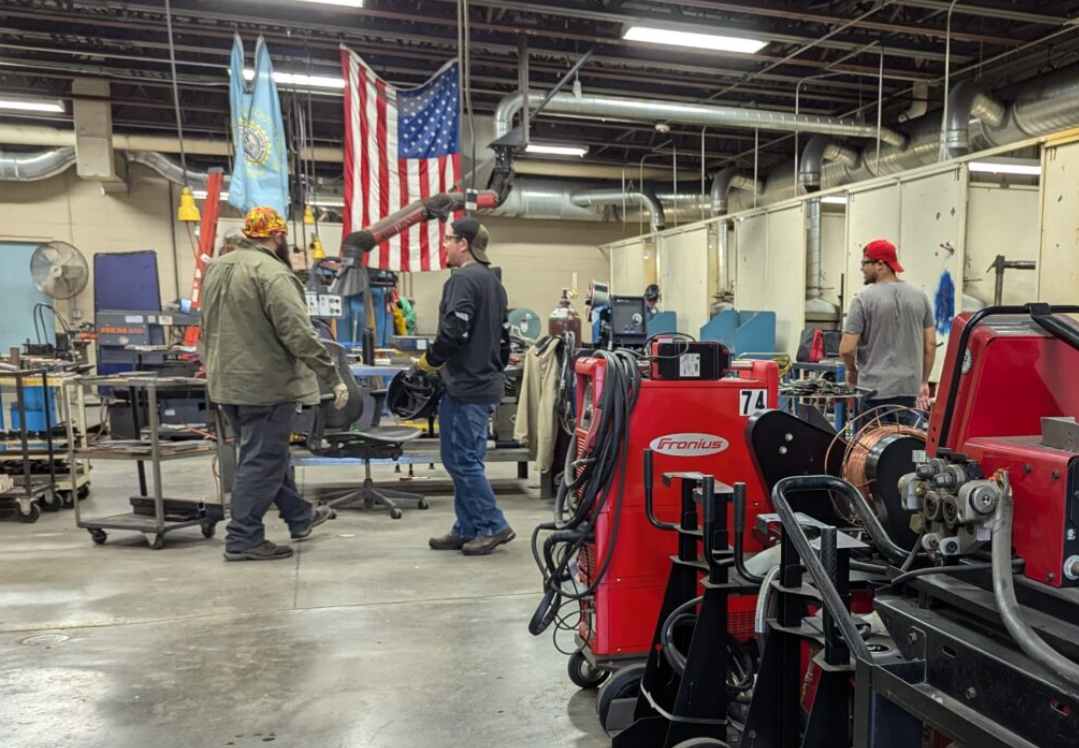
As the sun rose over Sioux Falls on a crisp October morning, a group of minimum-security inmates gathered at Southeast Technical College, their faces a blend of hope and determination. Among them, Michael, a 32-year-old father of two, clutched his welding helmet, dreaming of a future where he could provide for his family after serving his time. The welding program, now bolstered by the availability of Pell Grants, represents more than just a skill—it symbolizes a second chance at life.
In a significant development for inmates in the Sioux Falls area, Pell Grants are now accessible for those enrolled in welding and diesel mechanic courses. This initiative is part of the Second Chance Pell Grants program, which allows incarcerated individuals to apply for federal funding for post-secondary education. The announcement came during a recent meeting of the Correctional Rehabilitation Task Force, where Southeast Technical College’s president, Corey Clasemann, disclosed that the college's application to offer Second Chance-eligible programming was approved.
The welding program, which has been operational for five years, has previously relied on state Department of Labor grants to fund tuition for inmates. However, those funds have now been depleted. Starting in January, inmates will need to complete a Free Application for Federal Student Aid (FAFSA) form to determine their eligibility for Pell Grants, marking a pivotal shift in how educational opportunities are funded for these individuals.
This new funding avenue is expected to have a profound impact on the Sioux Falls community. In South Dakota, approximately half of those released from prison return within three years, a statistic that underscores the urgent need for effective rehabilitation programs. By providing inmates with vocational training, the hope is to equip them with the skills necessary to reintegrate into society successfully.
“Education is key to breaking the cycle of incarceration,” said Clasemann. “With Pell Grants, we can offer these individuals a chance to learn a trade that can lead to stable employment.” The college is also expanding its offerings with a diesel mechanic program set to launch in the South Dakota State Penitentiary's Jameson Annex, further enhancing the vocational opportunities available to inmates.
The Second Chance Pell Grants program, established in 2023, has opened doors for many incarcerated individuals across the country. By allowing inmates to access federal funds for education, the program aims to reduce recidivism rates and promote successful reintegration. Southeast Technical College is now one of three tech schools in South Dakota approved for these grants, joining Western Dakota Technical College and its plumbing and hospitality programs for inmates.
Clasemann emphasized that the process for inmates to apply for Pell Grants will mirror that of any other student, albeit with a paper application. This change is not just about funding; it represents a shift in perspective towards the incarcerated population, recognizing their potential for growth and change.
The initiative has garnered support from state leaders, including Governor Larry Rhoden, who allocated a $1.5 million grant to Southeast Tech to help fund the diesel mechanic program. This funding comes from the Future Fund, which is sourced from fees collected from South Dakota employers. Such investments in education reflect a growing recognition of the importance of rehabilitation in reducing crime rates and fostering healthier communities.
“Investing in education for inmates is an investment in our communities,” said Rhoden. “When individuals have the skills to succeed, we all benefit.” The establishment of a satellite campus at the new $650 million men’s prison under construction in Sioux Falls further demonstrates the commitment to providing educational opportunities where they are most needed.
For inmates like Michael, the welding program is more than just a chance to learn a trade; it’s a pathway to redemption. “I want to show my kids that I can change,” he shared, his voice filled with emotion. “I want to be a better father and a better man.” Stories like Michael’s highlight the human element of this initiative, reminding us that behind every statistic is a person striving for a better future.
The welding program has already seen success, with many participants reporting increased confidence and a renewed sense of purpose. Inmates are not only learning technical skills but also gaining valuable life lessons about responsibility and commitment. “It’s about building a future, not just for ourselves but for our families,” said another participant, reflecting on the transformative power of education.
As the first cohort of Pell Grant-funded students prepares to start in January, the community is buzzing with anticipation. The welding and diesel mechanic programs represent a significant step forward in addressing the challenges faced by incarcerated individuals. With the support of Pell Grants, Southeast Technical College is poised to make a lasting impact on the lives of these men and women.
Beyond individual stories, the implications of these programs extend to the broader South Dakota community. With the state facing challenges related to high recidivism rates, initiatives like these are critical. By investing in education and vocational training, South Dakota is taking proactive steps to reduce crime rates and improve public safety. As more inmates gain skills, the potential for them to contribute positively to society increases, which can lead to lower crime rates and a more stable community.
Moreover, the collaboration between Southeast Technical College and the South Dakota Department of Corrections exemplifies a model that could be replicated in other states. The success of these programs may inspire other educational institutions and correctional facilities to partner in similar initiatives, ultimately leading to a nationwide shift in how we view and support incarcerated individuals.
The Correctional Rehabilitation Task Force, which has been instrumental in advocating for these educational programs, is set to compile a comprehensive package of recommendations aimed at reducing recidivism rates in South Dakota. The endorsement of Pell Grants for inmate skills training is just one piece of a larger puzzle, but it is a crucial one. As the task force prepares to present its recommendations next month, the community will be watching closely to see how these initiatives evolve and what additional support may be needed.
“We need to continue to advocate for more resources and support for educational programs in our prisons,” Clasemann stated. “It’s not just about providing education; it’s about changing lives and breaking the cycle of incarceration.”
By Sofia Martinez

By Marcus Nguyen

By Franklin Abbott

By Isaiah Cole